The Importance of Wholeheartedness and Belonging at Work

Coffee cup heart coffee beans

“If we want people to fully show up at the workplace, we need to create a culture where people feel heard, cared for and connected. Psychological safety makes it possible to have tough conversations and trust and respect for each other. The benefits of having a place to belong include increased productivity, creativity, and innovation.” Brené Brown Education and Research Group

There’s no crying in baseball …or the office

Take out the emotion. That’s the common wisdom when it comes to work, and I learned it early on. I was never very good at it, but when I was beginning my career, no alternatives existed.

So, when at work, I focused on work. My persona, with the emotions taken out, interacted with the people I worked with. She was the construct I had created, what I thought, was the acceptable version of me to have a career in business. It worked for a while. I was dubbed an “A-player” by my male bosses and given promotions. I worked tirelessly to achieve more, be more. Be like those I was surrounded by daily.

It was long after the Don Draper era where people denied emotions completely and managed by openly self-medicating with a decanter in every executive’s office. And, it was a decade before any conversation around mental health in the workplace. It was the time of Obama, Osama Bin Laden, a recession caused by greedy bankers, climate change awareness, and the introduction of social media and smartphones. There was so much changing, yet this big thing that no one talked about.

Technology causes connection and disconnection

It was the final crossover period from analog to total digital. I had a laptop and a Blackberry and could work from anywhere. With Facebook, I could keep in touch with friends from all over the world. After my niece was born in London, UK, I could Skype with my sister every day so it felt as though I knew this little person without ever having actually met her. It was amazing. Technology was advancing at breakneck speed and enabling so much connection. And yet, so much disconnection.

Being able to work from anywhere, any time meant never really shutting off. It’s hard to rest when your mind is constantly spinning. Waking up feeling like I was already behind and never getting ahead. Working on my own, in isolation much of the time because I could. Because I was tired and it took too much energy to pretend to be upbeat and happy all the time which was the other version of me I had created.

Something felt off.

Anxiety creeps in

It came on slowly. The tightening in the chest became more pronounced, more noticeable more often. I could no longer just “push through it.” I could no longer deny that only bringing my persona was crippling my innate creativity and fostering my fears of being an imposter.

Humans are hardwired for connection. Like water, food, and air we need to connect with other beings. To do that, to really do that, you can’t be a persona. You have to bring your whole self. I’m not saying you can bring everything that’s going on in your life into work and lay it out on the table. That is self-indulgent and not productive. But it is OK to say sometimes, “I’m not really OK today. But I showed up and I’m doing my best.”

Wholehearted Living

Brene Brown’s 10 Guideposts for Wholehearted Living are as follows:

  1. Cultivating Authenticity and Letting Go of What Other People Think
  2. Cultivating Self-Compassion and Letting Go of Perfectionism
  3. Cultivating Your Resilient Spirit, Letting Go of Numbing and Powerlessness
  4. Cultivating Gratitude and Joy, Letting go of Scarcity and Fear of the Dark
  5. Cultivating Intuition and Trusting Faith, Letting Go of the Need for Certainty
  6. Cultivating Creativity and Letting Go of Comparison
  7. Cultivating Play and Rest, Letting Go of Exhaustion as a Status Symbol and Productivity as Self-Worth
  8. Cultivating Calm and Stillness and Letting Go of Anxiety as a Lifestyle
  9. Cultivating Meaningful Work, Letting Go of Self-Doubt and Supposed-To
  10. Cultivating Laughter, Song, and Dance. And Letting Go of Cool and Always in Control

I haven’t mastered this but wholeheartedness is my goal and I’m working toward it.

It may scare the crap out of some people. On the other hand, it may just give them the permission to say it too the next time they feel that way. It may just open up a workplace that is more empathetic which can’t help but create that connectivity we so need to be successful.

Also read: Bring Your Whole Self from my 40-Before-40 Series
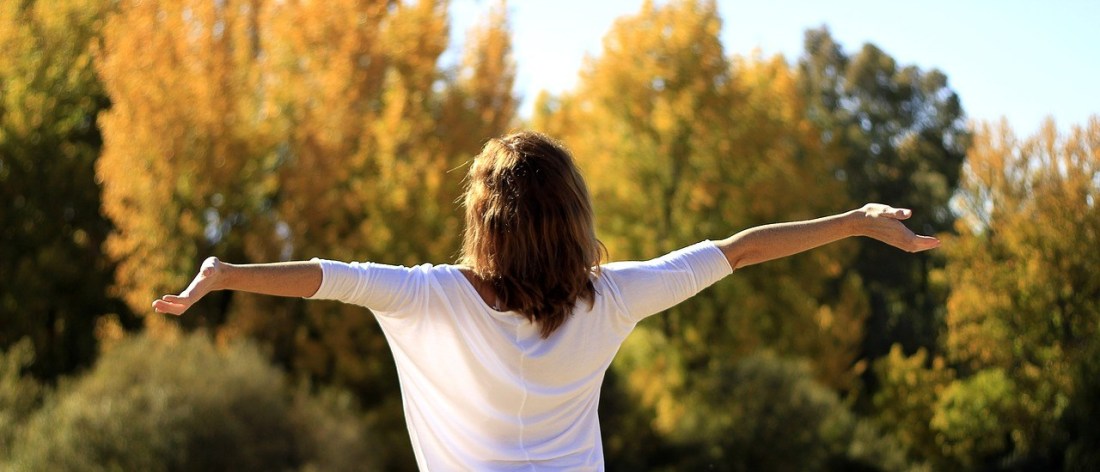
Woman with her arms open

Not Really OK

Saanich BC, Vancouver Island

“How are you?” Answering that question with anything other than a cheery platitude is considered a social faux pas. Generally, the question is a formality. People are not really interested in the answer. Especially if the answer is, “I’m not really OK.” 

Last fall, Meghan Markle shared in an interview with iTV in the U.K., that she was not really OK when asked about how she is handling the pressure and intense media scrutiny she was always under. She appeared honest and vulnerable. The very real moment with one of the world’s most-watched women captured on camera struck a chord with many. Including me. How many of us are also, sometimes pretending outwardly to be OK  behind a fragile facade?

Not being OK makes other people uncomfortable. It forces them to think about their own situation. So most of the time, we just say, “I’m fine. How are you?” What if you are not. OK. What if you don’t even really have the words to properly explain what is feeling a bit off? How does it make it even worse when you deny what you are feeling to help preserve the other person’s level of disconnect with their own emotions? 

Most of us have been taught that crying is a weakness so we mask it. Push it down, pretend it’s not there. We focus on accomplishing goals that will supposedly make us happy. Goals are a good thing. They keep us from getting too stuck in one place. But when constant striving fills you with emptiness and leaves your head spinning, it’s time to stop and recalibrate. 

Unfortunately, our society praises being busy and rewards those that achieve. Making it hard to be still and recharge. This leaves us feeling breathless and desperately lonely. For those of us who are extroverted introverts, it can lead to anxiety and depression. 

“We are hardwired for connection,” cites shame and vulnerability researcher Brene Brown. The cycle of shame over not being what people want us to be can be overwhelming. 

Things are changing though. There is a quiet rumble. You can hear it if you are paying attention. 

I think we are seeing something of a revolution in this regard. But, like every revolution, it takes a few brave people to publicly defy the behaviour of the masses. And those that do, will feel the bruises. And in this case, they feel everything else too. 

Reportedly, the Duchess and her eight-month-old son, Archie, are back in Saanich, BC where they spent the holidays. It’s a beautiful little spot in the world. Just a short drive and a ferry ride away from where I am. Having spent four years living on Vancouver Island while I went to the University of Victoria, I get the draw. The Pacific Ocean, the old-growth forests, and tree-lined streets make it a peaceful place where one might recharge their soul.  And, with so much attention surrounding her movements, it makes sense why she might need to do just that. 

No one is following me with a camera and I find myself seeking a place to hide sometimes. My kids are now seven and four. So I’m past the baby phase with my kids, but even still, it can all feel like too much at times. 

Having a baby changes you forever. And no one talks about it. Or if they do, it’s glossed over with how wonderful it is. Yes, it is — wonderful. But it is also so hard. You can’t complain because you have what so many people want so badly and struggle to find. It would seem ungrateful when your children are healthy and happy and you seem to have it all. So you stay quiet and force a smile.

I remember going for a walk one night with my husband a few days before the due date of my first child seven years ago. The houses in our new neighbourhood were lit brightly and decorated for Christmas — also only a couple of days away. It was snowing lightly and there were very few cars on the road.  It was perfect. I should have been so happy. 

He asked me why I was so quiet. For one thing, I got winded easily while walking at that late stage in my pregnancy. More than that though, I was overwhelmed by the impending shift that was about to happen in our lives. I said, “Everything is about to change.” He squeezed my hand and replied, “Yes, for the better.” I nodded. Of course. Having a baby was what both of us wanted. We were ready with the nursery and baby gear. And yet there was so much I wasn’t ready for and never would be. 

Things like how to get me and two kids out the door anywhere on time with everything we need for wherever we are going – school, soccer, the grocery store. There is just so much to think about all the time. Generally, we don’t require as much gear with us each time now that they aren’t babies. They can, theoretically, put on their own shoes and coats but you are still going through a mental checklist each time.

I struggle every day with the pressure of feeling like I have to be everything to everyone. I agonize over not being the one to pick my kids up from school each day because I also work full-time. At the same time, at work, I feel like I am not everything I could be because I can’t give the same number of hours as some colleagues at different life stages as me. It’s a constant push and pull. It’s exhausting. 

I know it is not sustainable. 

So maybe, change start out with small steps. Like answering honestly when asked, if you’re OK. Helping to change the expectation that you should always be OK. If I answer honestly, maybe it will encourage others to do the same.

Read more about this topic Bring Your Whole Self (11)

Finding Light in the Darkness

The electric toothbrush in my mouth stopped mid-whirrr, the lights shut off, and the fan’s buzzing on the other side of the wall in the bedroom was suddenly quiet. My thought process: there’s been an attack. By who? Space aliens or Republicans (I’ve been watching too many episodes of The Handmaid’s Tale) not sure – my mind didn’t have time to get to that point in the confabulation. 

I left the bathroom and saw a flashlight in the hall being held by my husband. “Is it more than our house?” I said. Even in the dark I could see him nod vigorously. “Come look.” Even before the drapes had been fully pulled the complete darkness was evident outside. It was eerie. It’s summer, but not hot enough to cause a blackout. It never is here. 

“Must have been something with all that construction by the highway.” Of course, that makes sense. My logical partner. The yin to my yang. He brings me back to solid ground. Why does my mind go to the extreme answer? The most dramatic version, the worst possible outcome, the least likely to happen is what I think of first. 

My imagination is active and still wild so that is a positive. I suspect, though, that I do it to prevent the proverbial rug from being pulled out from under me. Brene Brown says in Daring Greatly that it also prevents you from feeling joy in the moment. That is the opposite of what is in my personal Charter of Integrity for my life (more on that later). She says in order to stop the narrative, you need to stop and acknowledge that you are having an emotional reaction. A button has been pushed. 

This is my go-to but, I’ve recently come to realize, is something that can be changed. It is a habit like smoking (bad) or going to the gym every morning (good). Going to dark places is a habit that can be changed. 

“Once you realize that you are going into that spiral, you are no longer part of it,” says thought-leader Jon Kabat-Zinn on Oprah’s Super Soul Sunday . “You get to write yourself a restraining order to toxic thoughts.” How? Mr. Kabat-Zinn outline four steps: 

1-Recognize a toxic thoughts pattern

2- get to the root of your negative emotions

3- Lean away from the noise the mind is making

4- Accept this moment as if you had chosen it

So, last night, I put a flashlight on my bedside table and instead of freaking out about the total darkness, indulged in it and accepted it as natural blackout blinds. And you know what, I slept solidly until morning when everything was indeed light again.